For the last module in this class I initially did not think I was going to enjoy the topic as much as I did with the previous modules but in the end ended up enjoying it quite a bit. For the module 4 project of creating a website that showcased a specific social movement during the introduction of the internet me and my partner Conner decided to look at the anti globalization movement. One thing that I learned from diving deeper into it is that while the use of the internet and social media makes everything a lot easier there was still a very large presence of this movement before the digital age. One of the big concepts that I took away from this module was the idea of using technology to preserve what has already been created found in the “What is Digital Curation” reading. An example of this can be found on the website that I did for the module 4 project in which there is an old newspaper article that was scanned onto a computer that is now stored forever rather than it disappearing a week after it was printed. 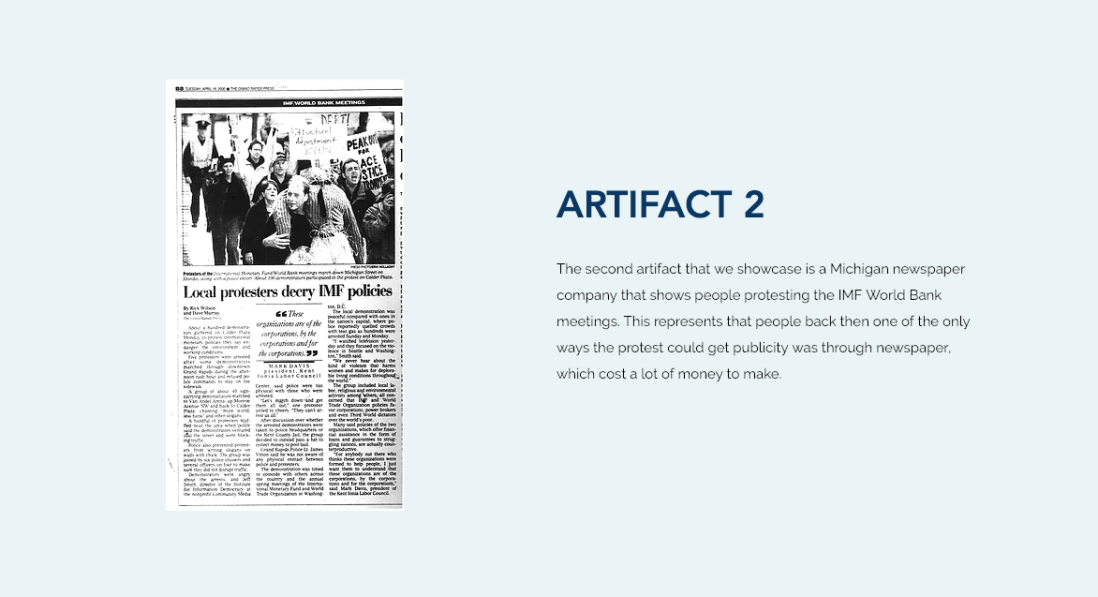
When I think of technology I think of what it can create and what innovations it is going to bring forward but the fact that it can be used to preserve our history and catalog things for future generations is fascinating. Another aspect of digital curation that I found interesting was the amount of work and the process that goes into creating a digital “museum”. The exact process can be found in the diagram found in the “DCC Curation Lifecycle Model” reading. 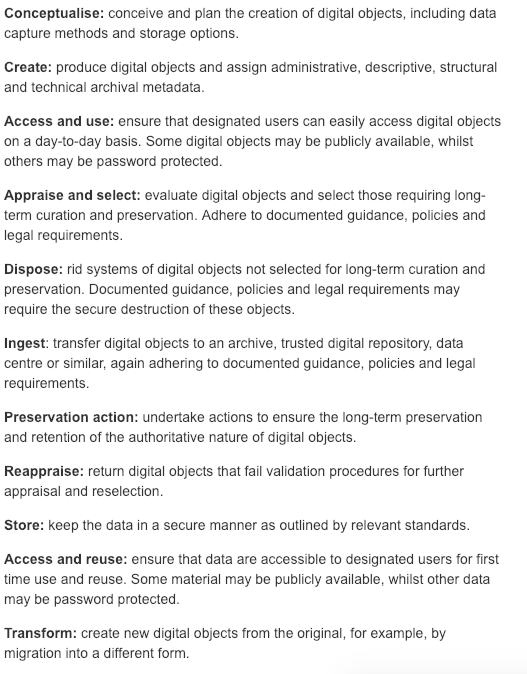

When I decided to choose DTC as my major I really wanted to use my degree to get into website building/marketing and because of this module I think that helping preserve the history that has already been made would make a really interesting career.
During my research and exploration into this topic I found a video that helps explain not only what digital curation is, but also why its important to everyone. To put what all this means into context, I linked a video that shows footage of WW2 and this is a perfect example of why its such an important field. While we will always have the stories of what happened in WW2 it is incredibly important to preserve the footage of the war because it helps give people a sense of what was actually going on during that time.

 Billy's DTC 101 Blog